Crypto Phishing Scams & Fake Support Accounts – 6 Scam Signs
In cryptocurrency, you are fully responsible for the safety of your own money. If your funds are lost, no authority or organization can help you recover them. In today’s time, scams are increasing rapidly, especially with new crypto users.
From 2024 to 2026, scams have been growing significantly. According to a report, in 2024 around $4.6 billion was lost in scams. In 2025, this number increased to $9.9 billion, and in 2026 scams are still rising.
So the question is: what is the solution? How do these crypto phishing scams happen in crypto, and how can we avoid them? In today’s guide, I will explain all the major crypto phising scams methods that are usually not discussed on most platforms. These are things that people mostly learn only after they become victims. In this guide crypto phising scams, explain everything in detail.
What is crypto phishing scams and what is normal (bank) phishing?
In normal banking systems, if you become a victim of a scam, banks can often help you. In many cases, if money is stolen from your account, the bank and authorities can trace the transaction. They may also help recover your funds.
But in crypto, this is not the same. If your money is once sent from your wallet, no authority can bring it back. In most cases, it cannot be reversed or recovered because cryptocurrency transactions are based on blockchain technology, which is decentralized and hard to control or reverse.
That is why people say in crypto: “You are your own bank.”
6 Most Dangerous Crypto Phishing Scams Techniques (2026)
In today’s guide, I will explain 8 methods through which new crypto users are almost always scammed without even realizing it. Many of these scams are so advanced that even experienced crypto users can easily fall into the trap. Today I will break down everything in detail. First, let’s look at the names of these scams:
- Fake Support Accounts
- Crypto Drainers
- Rotten Seed Phrase Attack
- Telegram Phishing Bots
- AI Deepfake Scams
- Advanced Attack Vectors
Fake Support Account Scam
This is a very common scam in the crypto world, and most new users don’t even know it exists. Experienced users usually understand it, but beginners often become the first target.
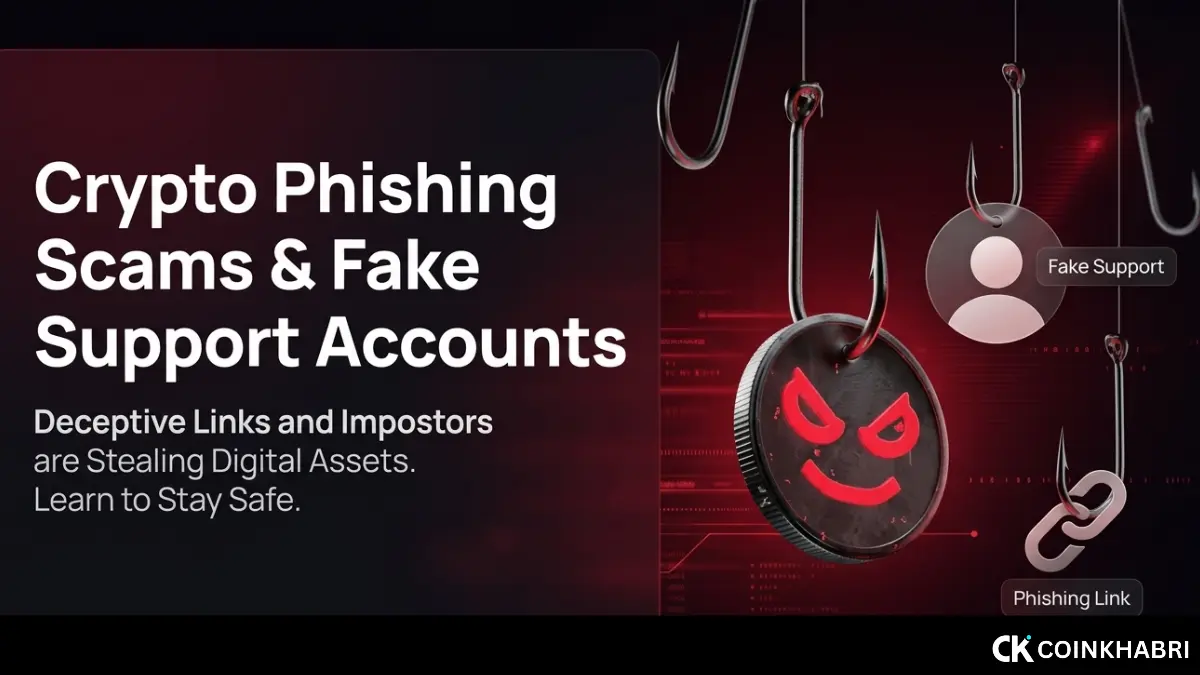
crypto phising scams, fraudsters create fake “support” accounts on social media platforms like X (Twitter), Reddit, Discord servers, and Telegram. They use names that look very official, such as “suppoortbinance.co” or something similar. Sometimes they even include words like “official,” “support,” or even the name of a CEO to make the account look real.
They also use profile pictures that look official, so a new user easily believes it is a real support team.
When a new user faces any problem, they usually post about it on X or another platform saying, “I have this issue.” Since they don’t have much knowledge about crypto support systems, they become an easy target.
The fake support account then sends them a direct message, claiming: “I am from the support team, what issue are you facing?” The user explains their problem, and the scammer acts helpful. Then they say something like: “Give me your account details, I will log in and fix your issue.”
As soon as the user shares their login details, the scammer takes full control of the account and transfers all funds to a hardware wallet or other untraceable wallet. After that, it becomes almost impossible for any authority or organization to recover the funds.
crypto phising scams mostly happens with people who are new to cryptocurrency and don’t know how official support actually works.
Crypto Drainers
crypto phising scams is also very common, but it is more advanced, so not everyone knows about it. In this scam, a special script is used that can steal all your crypto assets with just one click, and everything gets transferred to the scammer’s account.
Scammers usually buy this type of script from the dark web. After getting it, they create a fake copy of popular websites like Uniswap, OpenSea, or other well-known DeFi platforms. Once the fake website is ready, they run this malicious script on it.
When a user visits the fake website, they are asked to connect their wallet, such as MetaMask or other crypto wallets. As soon as the wallet is connected, the hidden script activates. It is programmed in a way that within seconds, all funds from the user’s wallet are automatically transferred to the scammer’s account. The user usually does not even realize that they have been scammed until it is too late.
Rotten Seed Phrase Attack
crypto phising scams became very viral in 2025. In this scam, the attacker publicly posts a seed phrase on social media. Along with it, they write something like: “I can’t import this wallet, can someone help me?”
When an inexperienced user sees this, they think the seed phrase is real and that the wallet is abandoned or unused. Then they try to import the wallet and gain access.
After importing, the wallet may open successfully, but it usually shows that gas fees are required to withdraw funds. This is where the real trap begins.
The scammer already sets up a “sweeper bot” in that compromised wallet. As soon as the user sends ETH or any token for gas fees, the bot immediately detects it and drains or locks the funds.
Because of this, the victim ends up in a situation where they cannot withdraw their own funds, and even the gas fees they added are also lost.
In short, this scam tricks users into importing a fake “seed phrase wallet” and then steals any funds they try to use for transactions. This is why the Rotten Seed Phrase Attack became a widely spread scam in 2025.
Telegram Phishing Bots
crypto phising scams is used less often, but according to reports it has already affected more than 5 million people. In this scam, attackers create a Telegram bot and program it in a way that tricks users into connecting their accounts just once.
The scammer often attracts people through fake airdrops. They say that if you want to withdraw your airdrop rewards, you must first connect your account. Innocent users then connect their wallet to the bot, thinking it is safe.
Once the wallet is connected, the bot secretly steals all the funds and transfers them to the scammer’s account.
AI Deepfake Scams
We are now in 2026, the era of AI. Earlier, scammers only used simple text messages to trick people, but that time has changed. Now, with AI, scams are happening through voice and video as well.
In 2026, it has been seen that scammers target crypto users using AI deepfake video calls. They create fake videos of high-profile people and make it look like a real video call.
During the call, they claim that there is a verification issue with your crypto account and ask you to provide your seed phrase to fix the problem. As soon as the user shares their cold wallet seed phrase, the scammer gains access and transfers all the funds to their own wallet.
Advanced Attack Vectors
This is a type of scam that very few people know about. It is a very powerful and dangerous scam because the attacker creates a wallet address that looks almost identical to yours. The beginning and ending characters of the address are the same, which makes it very hard to notice the difference.
Once the scammer creates this similar-looking address, they send a small amount of crypto to your wallet. This makes the fake address appear in your transaction history. Later, when you are in a hurry and copy an address from your history, you may accidentally select this fake one.
If you send crypto to that address by mistake, instead of going to the intended wallet, your funds are transferred directly to the scammer’s wallet. This is a lesser-known scam, and most people only understand it after they have already become a victim.
How to Stay Safe from Crypto Phising Scams
No matter how advanced scammers become—whether they use AI, bots, or smart contracts—their entire trap depends on just one thing: your single mistake. If you follow these basic but powerful cybersecurity rules, no hacker in the world can touch your wallet or account.
Always use a hardware wallet like Ledger or Trezor because their seed phrase is not stored online. These wallets stay disconnected from the internet, which makes them much safer. That is why phishing attacks rarely work on them.
Check out our guide on How to Protect Digital Assets Hardware Wallet & Cold Wallet
Exchanges like Binance, OKX, and others also provide an “anti-phishing code” feature. You should enable it. When this feature is active, every real email from the exchange will include your personal code. If the code is missing, the email is fake.
Always open crypto exchange, wallet, and DeFi platform links from your browser bookmarks. Never search for them on Google because scammers can run paid ads to trick users into fake websites.
If you ever see an offer that creates urgency like “only 5 minutes left” or “your account has an issue, act quickly,” stay calm. Do not rush. First check if the website is real or just a scam.
If you have approved anything on a DeFi site, always double-check it. You can use tools like Etherscan or Revoke.cash to see what access you have given. If something looks suspicious or unnecessary, remove or change those permissions immediately.
If you get trapped in a scam, what should you do?
When a scam happens, a person usually panics and in that panic they end up making more mistakes. If you ever become a victim of fraud, immediately without wasting time follow these steps:
First of all, check whether the scam happened with your wallet, like MetaMask or Trust Wallet. If it did, immediately create a new wallet and never use the old wallet again in your life.
If the scam happened on an exchange, contact the exchange through email. The exchange may help you secure or recover your account and guide you on what to do next.
If the scam happened on Telegram or a similar platform, first check quickly whether the hacker still has access or not. If access is still active, immediately remove the scammer’s access. If you cannot control the account, permanently delete your Telegram account and start a new one.
If the loss is very large, you can also take legal action. File a complaint with FIA (Federal Investigation Agency) and provide them with all the details. FIA will assist you as much as possible, and there is a chance they may even succeed in catching the scammer.
Conclusion
In the crypto world, you are your own bank, so it is your responsibility to protect your money. Always be careful with every message and link that you did not request yourself. If you spend a little time on your security, your capital will stay safe. Stay safe, stay educated!