What Is Sim Swap Scam and How to Protect Yourself 2026 Guide
Today, I am going to expose a cryptocurrency scam that very few people know about. There is very little information about this scam on the internet, and it is rarely explained in detail. In this guide, you will learn everything about sim swap in a simple way.
This scam is called a SIM Swap Scam. It is commonly used in countries like Pakistan and India to steal cryptocurrency. The people who usually become victims are those whose personal information is publicly available, such as their email address, CNIC number, phone number, or other personal details.
What is SIM Swap Scam? How do hackers use it to steal your cryptocurrency? How can you protect yourself from SIM swap scam? What are the warning signs that can help you identify it? You will learn all of this and much more in this detailed guide.
What Is SIM Swap Scam?
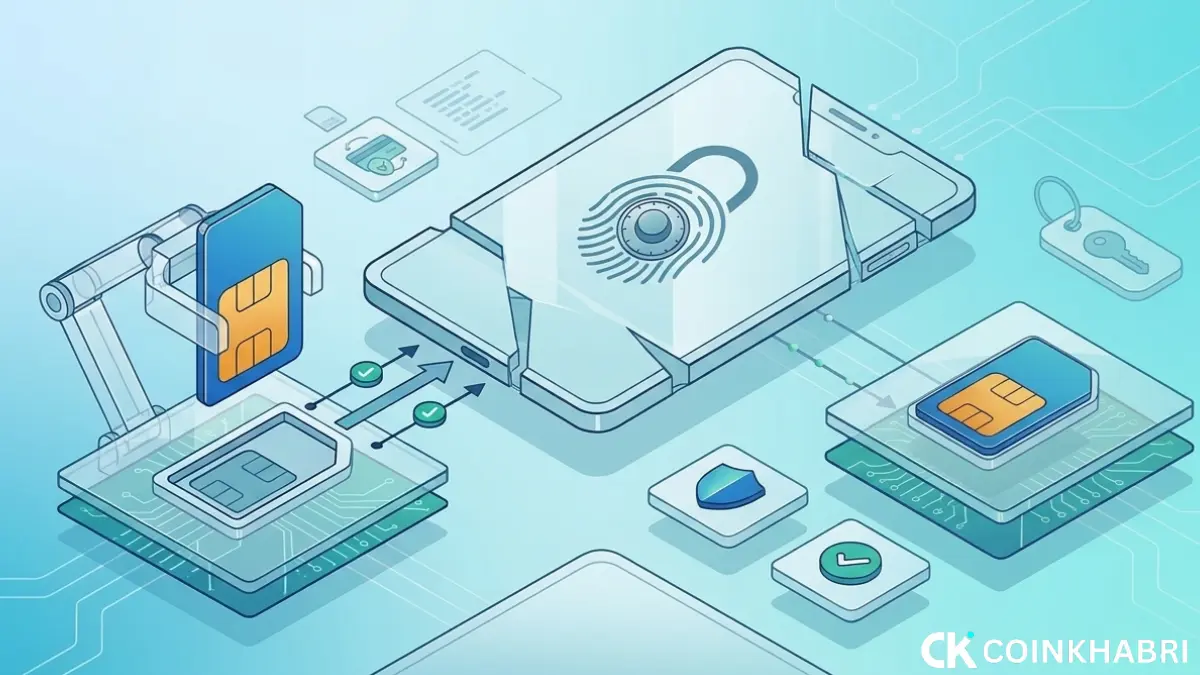
A SIM Swap Scam, also known as SIM Hijacking or a SIM Porting Attack, is a type of cyberattack in which a hacker transfers your mobile phone number to a new SIM card that they control. They do this by tricking or deceiving your mobile network provider.
As a result, your phone suddenly loses network signal and stops receiving calls or text messages. Meanwhile, all your calls and SMS messages—especially bank OTPs and cryptocurrency verification codes—start going directly to the hacker’s phone.
Most victims think it is just a temporary network or service problem, while the hacker is secretly gaining access to their important accounts.
How Does a SIM Swap Scam Work?
SIM swap scam usually starts when a hacker collects your personal information from social media, data leaks, or other sources. One of the most important pieces of information they look for is your national ID number (such as a CNIC).
Once the hacker gets access to your ID details, they try to find out which mobile number is registered in your name. After identifying your phone number, they look for the email address linked to your cryptocurrency exchange, DeFi platform, or other crypto accounts.
Next, the hacker visits the login page of the exchange and clicks on the “Forgot Password” option. The platform then offers a password reset process that may require a verification code (OTP) sent to the registered mobile number.
At this stage, the hacker attempts to take control of your phone number by tricking the mobile network provider into transferring your number to a SIM card under their control. Because they now control your phone number, the OTP is sent to them instead of you.
Meanwhile, your phone suddenly loses network signal, making it appear as if there is a temporary service issue. In reality, your number has already been transferred to another SIM card.
Using the OTP received on the new SIM card, the hacker resets your account password, gains access to the account, and may attempt to steal funds or sensitive information.
In some cases, criminals may also work with dishonest insiders who provide customer information or assist in the SIM transfer process. This can make the attack even more dangerous.
There have been several reported cases around the world where victims lost access to their cryptocurrency accounts after becoming targets of SIM swapping attacks. This is why protecting your personal information and securing your accounts with strong security measures is extremely important.
Where Do Hackers Get Your Information?
Understanding where hackers get your personal information is very important. In cryptocurrency, you are responsible for protecting your own assets, so knowing these risks can help you stay safe.
Social Media
One of the most common sources of information for hackers is social media. Many people publicly share details such as their location, date of birth, email address, phone number, workplace, and other personal information. Hackers collect these details and use them to build a profile of their target.
Data Breaches
Hackers also obtain information from data breaches. When websites, apps, or online services suffer security breaches, customer data can be exposed or stolen. This information may include email addresses, phone numbers, passwords, and other personal details. Cybercriminals often buy or access this leaked data to target victims.
Dark Web Data Markets
The dark web contains marketplaces where stolen personal information is bought and sold. In some cases, hackers can purchase databases containing information from specific countries, regions, or industries. They often pay with cryptocurrency to obtain this data and use it for scams and cyberattacks.
Insider Threats
Another serious risk comes from dishonest insiders. In some cases, criminals may bribe employees who have access to customer information. These insiders can provide sensitive data that helps hackers carry out attacks such as SIM swapping. Because the information comes directly from internal systems, it can be highly accurate and especially dangerous.
For this reason, it is important to limit the amount of personal information you share online and use strong security measures to protect your accounts.
How to Know If You Are a Victim of a SIM Swap Scam
There are several warning signs that may indicate your phone number has been targeted in a SIM swap attack. Recognizing these signs early can help you take action before serious damage occurs.
- Your Phone Suddenly Loses Signal
- You Receive Unexpected Messages
- You Cannot Access Your Accounts
How to Protect Yourself from a SIM Swap Scam
To protect yourself from SIM swap scam, you need to think one step ahead of normal security practices because hackers usually target users with weak or basic security.
Stop Using SMS-Based 2FA
The most important step is to turn off SMS-based two-factor authentication (2FA) on your accounts like Binance, Gmail, and other crypto or banking apps. Many people rely on SMS OTPs, but this is exactly what SIM swap attacks target.
Instead, use authentication apps like Google Authenticator or Authy. These apps are linked to your device, not your SIM card. So even if a hacker gets a duplicate SIM, they still cannot access your verification codes.
If a hacker successfully bypasses your SIM, they can easily target your Web3 accounts. Learn the protect your digital assets in security in our How to Protect Digital Assets Hardware Wallet & Cold Wallet guide.
Enable SIM Card Lock
You should also activate the SIM card lock feature on your phone. Set a strong 4 to 8 digit PIN for your SIM card.
This ensures that if someone tries to use your SIM in another device, it will not work without the PIN. After a few wrong attempts, the SIM can even get permanently blocked, adding extra protection.
Secure Your Mobile Network Account
For extra safety, visit your mobile network provider (such as Jazz, Telenor, Zong, or Ufone) and ask them to add strict verification to your number.
This means no new SIM can be issued unless you personally verify your identity using biometric confirmation (thumb impression) at a franchise center.
Use a Private “Ghost Email”
Keep the email used for your crypto accounts private. Do not share it publicly or use it for social media accounts.
Also, make sure to add a backup recovery email instead of relying only on a phone number for recovery.
Use Hardware Security Keys (Advanced Protection)
If you have a large crypto portfolio and want maximum security, consider using a hardware security key like YubiKey.
This is a physical device (like a USB key) that must be connected to your phone or computer to log in. Without this key, no one can access your account—even if they have your password and SIM card. This is one of the strongest security methods available today.
What to Do If a SIM Swap Happens
If a SIM swap happens to you, it means your phone suddenly loses signal and shows “No Service” or “Emergency Calls Only,” while other people’s networks are working fine. In this situation, you only have a few minutes to act before the hacker takes full control. Stay calm and follow these steps quickly.
Connect to Wi-Fi Immediately
First, do not wait for your mobile network to return. Connect your phone to Wi-Fi using a home, shop, or a friend’s internet connection. As soon as you are online, open your crypto exchange app (such as Binance or any other you use).
Go to settings and use the “Freeze Account” or “Disable Account” option. Most major exchanges provide this emergency feature, which locks your account for 24–48 hours and prevents any withdrawals, even if someone changes your password.
Secure Your Email Account
After securing your crypto account, log in to your email from another device like a laptop or secondary phone.
Go to security settings and find “Manage Devices” or “Active Sessions.” Sign out of all other devices immediately. This will remove the hacker’s access if they have logged into your email.
Block Your Bank Accounts
If possible, use a trusted phone to call your bank’s helpline. Ask them to temporarily block your bank accounts and mobile banking apps to protect your money.
Contact Your Mobile Network Provider
Finally, call your mobile network provider (such as Jazz, Telenor, Zong, or Ufone) from any working number.
Tell them clearly that your number has been SIM swapped and request them to immediately block all incoming and outgoing services on your number. This will stop the hacker from using your SIM.
After that, visit the franchise center as soon as possible with your original ID card and complete biometric verification to recover your SIM and permanently block the duplicate one being used by the hacker.
Conclusion
The SIM Swap Scam is one of the most advanced and dangerous frauds of the 21st century. It is also increasing in countries like Pakistan due to the rapid growth of cryptocurrency and digital banking.
The worst part is that this attack does not usually happen because of a weakness in your phone’s security, but because of weaknesses in telecom systems and user mistakes.
The good news is that if you follow the security steps mentioned above—especially using app-based 2FA and enabling SIM lock—you can protect yourself up to 95% from this type of attack.