What is a Dusting Attack and How to Protect Yourself?

In today’s guide, you will learn everything about dusting attack. You will also discover some important things that are not widely available on the internet, as this topic is usually kept private.
People who earn money from cryptocurrency have probably heard that they should stay safe from dusting attack. So the question comes to mind: what is a dusting attack? Why is it done? And how can we protect ourselves from it?
This is not a common hack where your funds are directly stolen. Instead, it is an advanced surveillance tool used to leak your privacy. In this guide, everything about this dusting attack will be explained to you.
What is a Dusting Attack?
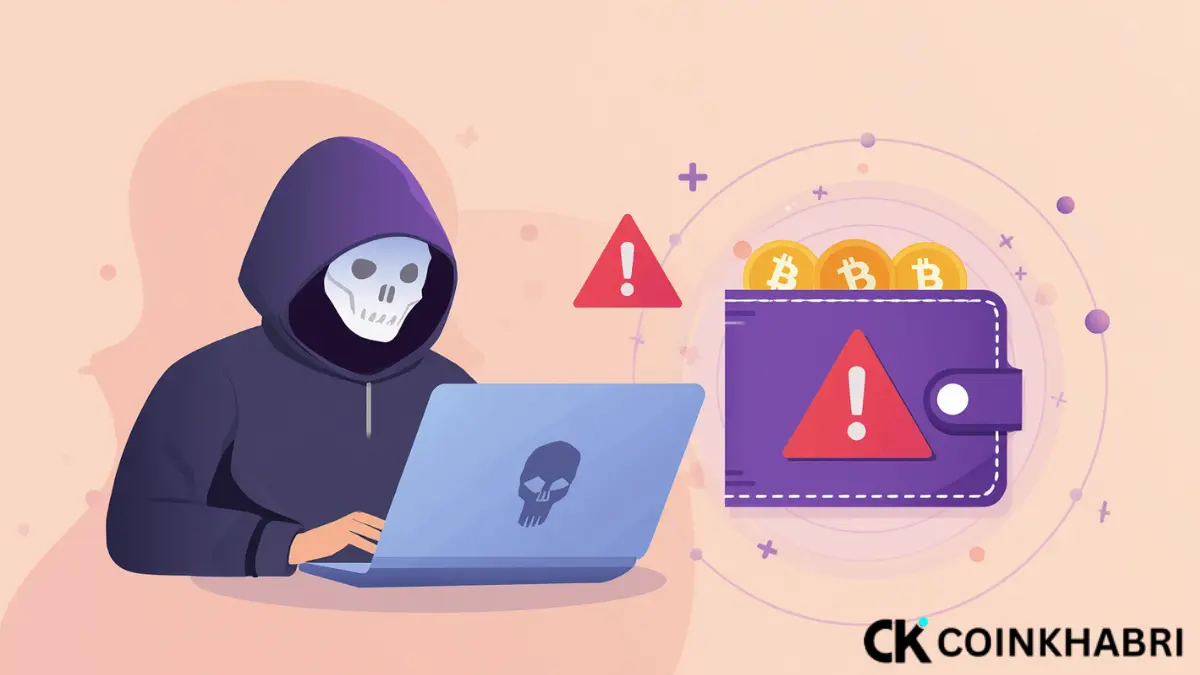
A Dusting Attack is a type of surveillance technique in which an attacker sends a very small amount of cryptocurrency to your wallet. This amount is so tiny that you usually ignore it. However, this “dust” is actually used as a tool to weaken your privacy and track your wallet activity.
Imagine a stranger leaves a small piece of paper outside your house. You might think it is useless and ignore it. But what if that paper has a GPS tracker hidden in it? It could then track your every movement. A similar thing happens in crypto with a dusting attack.
What is a Dust Transaction?
In crypto wallets, there is an automatic system called UTXO. When you send crypto to someone, your wallet combines all your small balances and creates one total amount for the transaction.
If a hacker sends you a very small amount like 0.000005 BTC (called dust), and you do nothing with it (it just stays in your wallet), then the hacker cannot track you.
But when you later send crypto to an exchange or a friend, your wallet may accidentally mix this dust with your other funds while creating the transaction. As soon as this happens, the blockchain gives a signal, and the hacker can see that this wallet has made a transaction somewhere and may start tracking it.
How Does It Work?
A hacker does not manually create this attack. Instead, they use an automated software script (like Python or JavaScript).
First, the hacker collects data from the blockchain network to find active wallets that hold a large amount of cryptocurrency. When they get a list of thousands of wallets, they use a multi-sender tool or a smart contract to send very small amounts of crypto (called “dust”) to all those addresses at once.
This dust amount is intentionally very small so that users cannot treat it separately. It forces users to mix it with their main funds when they make transactions.
After sending the dust, the hacker activates a tracking system (blockchain analytics tool) in the background. This tool continuously monitors all the wallets that received dust, 24/7.
Whenever a user makes a transaction and that dust gets mixed with their real crypto and moves, the hacker gets an alert on their dashboard. From there, the tracking tool follows the transaction path all the way to centralized exchanges, where the hacker tries to identify the user’s real identity, name, and location.
Who Performs Dusting Attacks?
According to reports, dusting attacks are carried out by four types of actors: hackers, blockchain analytics companies, law enforcement agencies, governments, and new crypto projects.
Hackers
Hackers use dusting attacks to find wallets that contain large amounts of cryptocurrency. Once they identify such wallets through dust transactions, they usually do not attack directly. Instead, they try other methods like sending phishing emails, attempting SIM swap attacks, or using malicious smart contracts (wallet drainers) to steal the full funds from the wallet.
Blockchain Analytics Companies
Large blockchain analytics firms also use dusting techniques for tracking purposes. Their goal is to clean and analyze blockchain data and link different wallets together. After collecting this information, they often sell their tools and data to government agencies or crypto exchanges to help monitor crypto transactions more effectively.
Law Enforcement and Governments
Intelligence agencies and government departments around the world (such as tax authorities, FBI, or similar organizations) use dust transactions to track illegal activities in the crypto space. Their main goal is to identify criminals, money launderers, and tax evaders. By using dusting methods, they try to link anonymous crypto wallets with real-world identities through KYC data.
New Crypto Projects
Today, many new crypto projects also use a similar technique known as “airdrop dusting.” They send small amounts of their new tokens to thousands or even millions of wallets for free. Their purpose is not to harm users but to promote their project, increase awareness, and attract attention in the crypto market.
How to Protect Yourself from Dusting Attacks
Dusting attacks mostly happen with large crypto wallets, but you can protect yourself easily if you avoid common mistakes. Below are some simple ways to stay safe from dusting attacks in the future.
If any unknown token or “dust” appears in your wallet and you don’t know its purpose or value, do not interact with it at all. Just leave it where it is. This is the safest approach and helps you avoid exposure to dusting attacks.
If you are using advanced wallets like Electrum, Ledger, or Trezor, they offer a feature called Coin Control. You can use this feature to mark the dust transaction as “Freeze” or “Do Not Spend.” This ensures your wallet will not accidentally mix that dust with your other funds during future transactions.
If dust appears in a centralized exchange account like Binance, there is usually no need to worry. You can use the official option like “Convert Small Balances” (or similar feature) to clean up small dust amounts. Since exchanges operate internally, there is no major privacy risk in this case.
It is also recommended to use HD (Hierarchical Deterministic) wallets. These wallets automatically generate a new address for every transaction. This makes it harder for attackers to track your activity, even if one of your addresses receives dust.
Some attackers also try to track users by combining blockchain data with IP addresses. To stay more private, you can use a good VPN while making transactions so your real location stays hidden. Additionally, using secure and private RPC nodes instead of default wallet nodes can further improve your privacy.
If you notice repeated dusting attempts, you can also switch to privacy-focused coins like Monero ($XMR). These coins are designed to hide transaction details by default, making it almost impossible for attackers to trace or analyze your activity through UTXO tracking or dusting techniques.
Suggest: How to Protect Digital Assets Hardware Wallet & Cold Wallet
Conclusion
Hackers around the world, government agencies, and blockchain surveillance companies may be watching your wallet, but in this whole system, control is still in your hands. If you learn to ignore unknown balances, keep the Coin Control feature active, and stay away from greed, then your privacy will remain safe and will not be exposed.